
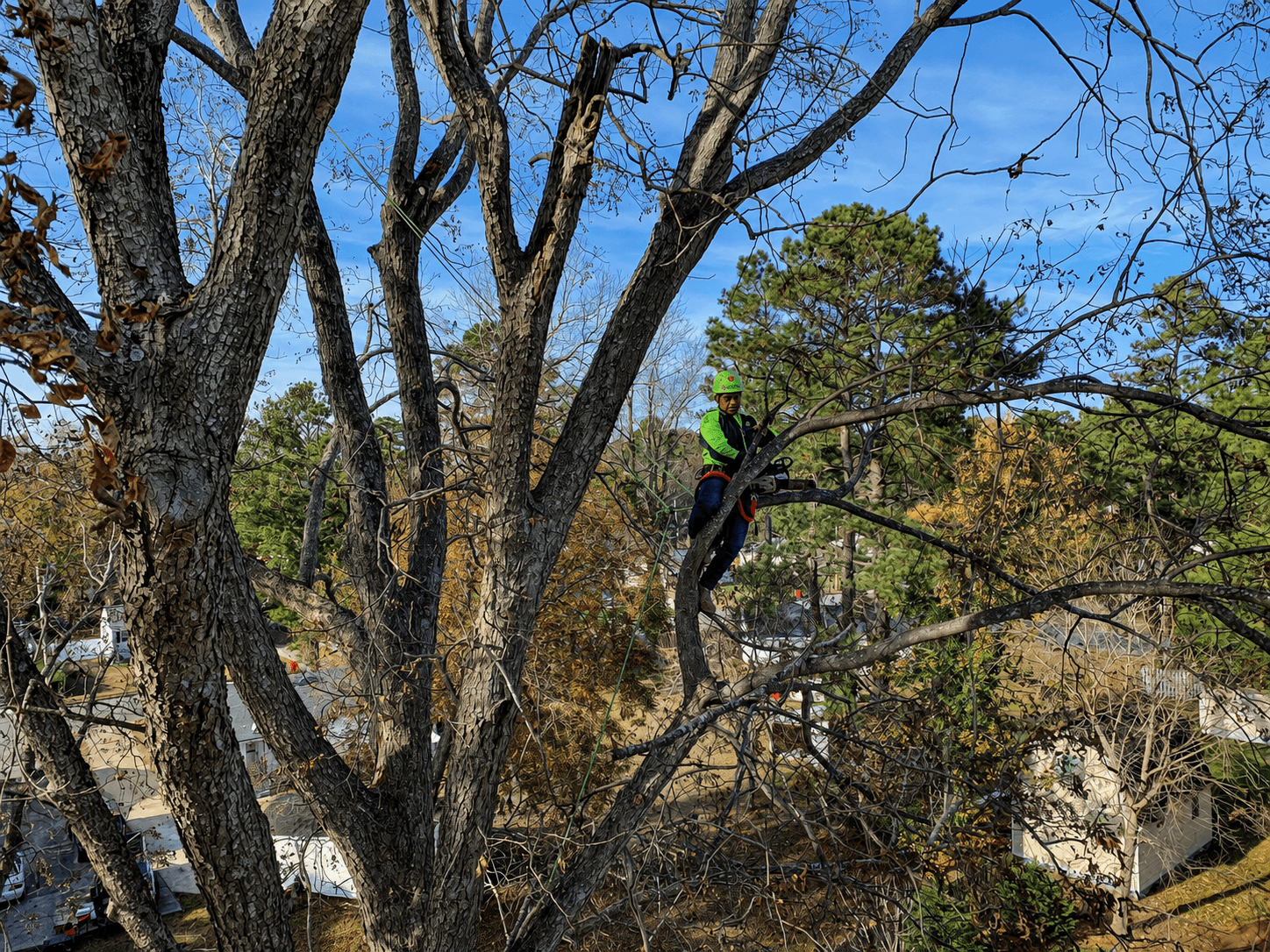
A responsible seasonal plan uses observation, weather, tree biology, property schedules, soil information, and storm preparation rather than treating every month as a mandatory treatment date.
Use the calendar as a prompt, not a prescription
Trees do not read a maintenance calendar. Species, age, condition, soil, exposure, rainfall, storm history, planting date, and management objectives affect what is appropriate. A useful calendar reminds owners when to observe, plan, and coordinate. It should not trigger unnecessary pruning, fertilizer, or pesticide applications.
Keep a simple property record with photographs, completed work, known concerns, irrigation changes, construction, storms, and follow-up dates. Comparing the same trees through time is more informative than reacting to every normal seasonal change.
Winter is a strong planning window
Use quieter winter periods to review tree structure, access, dormant canopy visibility, and projects planned for the year. Leaf-off conditions can make branch architecture easier to see on deciduous trees, though evergreen and live-oak patterns differ. Schedule assessments before spring construction or the rush of storm-season preparation.
Confirm long-term objectives for mature trees, roof and roadway clearance, replacement planting, and managed-property budgets. Winter is also a useful time to organize records, verify emergency contacts, and coordinate utility or permit questions that may delay later work.
Spring observation should focus on change
As growth begins, note delayed leaf-out, sparse sections, unusual color, dead tips, fungal signs, new cracks, storm damage, and construction impacts. Compare with previous years and neighboring trees of the same species when possible. Timing matters because species do not all leaf out together.
Inspect recent planting for staking, mulch depth, irrigation, and trunk damage. Keep mulch away from direct trunk contact and avoid creating deep mounds. Before fertilizing, identify the objective and use soil information. Visible decline does not prove nutrient deficiency.
Early summer is the deadline for storm preparation
Review priority trees near occupied structures, main access, parking, and utilities before hurricane forecasts create urgent demand. Complete justified pruning or removals with enough time for responsible scheduling. Update photographs, gate codes, remote-owner authority, and insurer or utility contacts.
Avoid broad canopy thinning presented as hurricane protection. Pruning should address specific defects, dead material, structure, clearance, or overextended limbs according to the tree. Excess foliage removal can stress trees and does not create a guarantee against wind damage.
Summer care is mostly about monitoring stress
Watch for drought stress, waterlogging, salt effects, insect or disease symptoms, construction disturbance, soil compaction, and mechanical damage. Irrigation needs depend on soil, establishment, weather, species, root condition, and site drainage. Repeated shallow watering and chronic saturation can both create problems.
Schedule diagnosis before treatment when the cause is unclear. Plant health care may include monitoring, soil management, targeted treatments, micro injection, or other measures, but the treatment should follow identification of the problem and a defined objective.
After each major storm, perform a safe review
From a safe location, look for hanging branches, fresh cracks, exposed roots, changed lean, broken tops, contact with structures, blocked access, and electrical hazards. Keep people away from suspended or moving material. Contact the utility for downed conductors or vegetation in electrical contact.
Document changes before cleanup when it is safe. Emergency stabilization may come first, followed by a more complete assessment of retained trees. Not every storm-damaged tree requires removal, and not every standing tree is free of important damage.
Fall is for follow-up and future budgets
Review what changed during the growing and storm seasons. Complete recommended monitoring, update priority lists, and plan work that could not be scheduled earlier. For HOAs and commercial properties, use field findings to support the next budget rather than repeating the previous year's numbers without context.
Evaluate planting opportunities based on mature size, utilities, rooting space, soil, drainage, exposure, and desired function. Fall can be a useful planting period for many species, but site preparation, stock quality, establishment care, and local conditions still determine success.
Build one annual cycle that fits the property
A practical cycle includes routine observation, one planned review period, pre-storm preparation, event-driven assessment, documented work, and follow-up. High-use or high-consequence sites may need more frequent review. Low-use natural areas may use different intervals and objectives.
The calendar should make good decisions easier, not create work for its own sake. If the tree is healthy, well placed, and meeting the property objective, the best seasonal action may be observation and leaving it alone.