A useful residential tree assessment connects the tree's condition with nearby targets, access, property use, owner goals, and the limits of what can be concluded during one visit.
The assessment starts before anyone arrives
A productive visit begins with a clear description of the concern. Tell the arborist what changed, when you first noticed it, whether there was recent wind, construction, flooding, pruning, or equipment traffic, and what sits within reach of the tree. Wide photographs that show the whole tree and its surroundings are often more useful for scheduling than close photographs of bark alone.
The company may first determine whether the request is an ordinary estimate, a paid consultation, or an urgent response. Those are different services. An estimate is usually built around a reasonably defined scope of work. A consultation is more appropriate when the main need is analysis, alternatives, documentation, or a difficult decision. Immediate response is reserved for conditions that create a pressing access, electrical, or life-safety concern.
The whole property changes the recommendation
A tree does not exist by itself. An arborist looks at the house, driveway, parking, play areas, neighboring property, septic features, utilities, landscape beds, and the way people use the site. These are potential targets and constraints. They influence both the consequence of a branch or tree failure and the practical methods available for inspection or work.
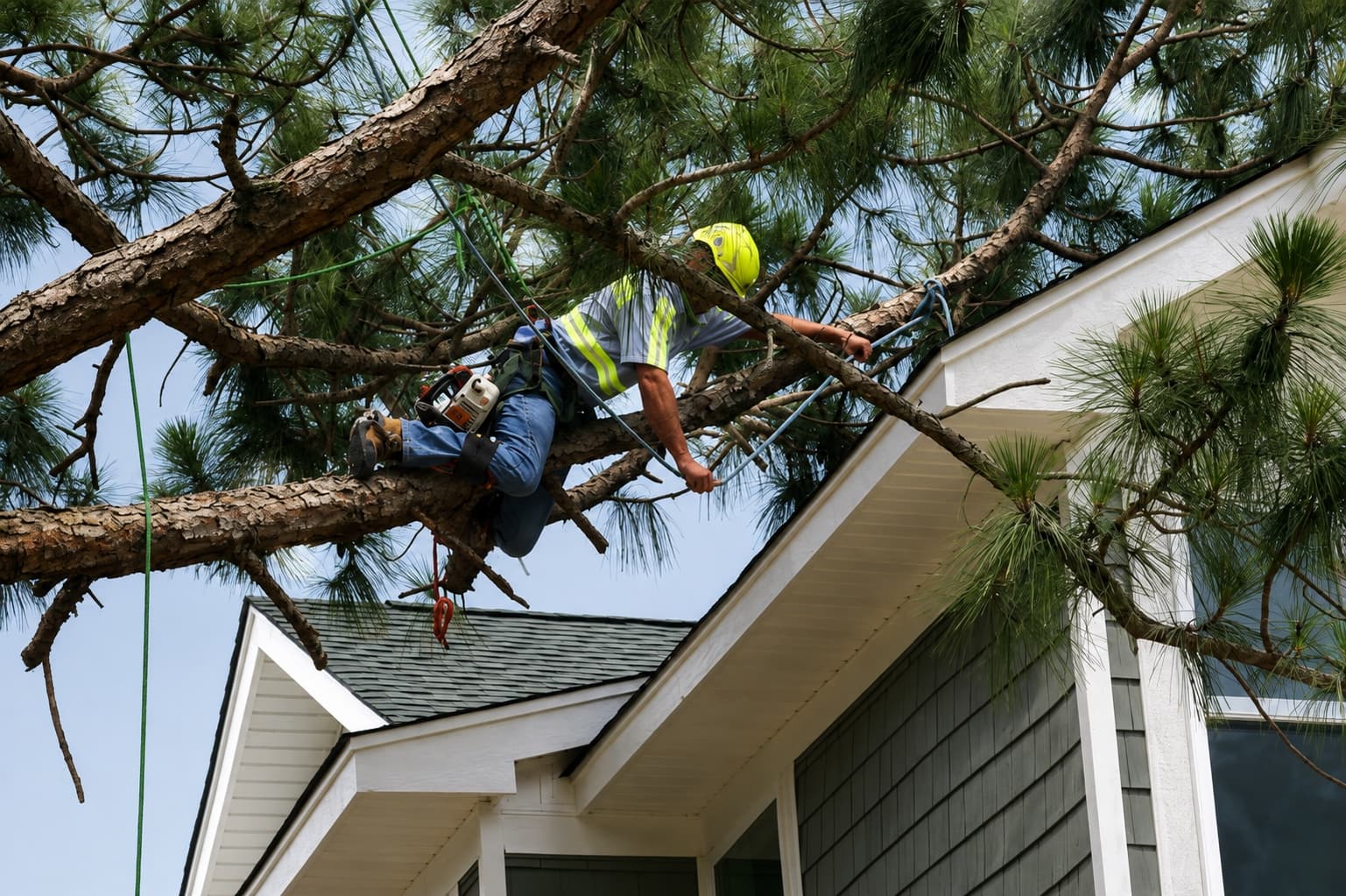
Access matters just as much. Gates, overhead conductors, soft ground, tight side yards, roofs, pools, fences, and traffic can change the equipment and rigging plan. A recommendation that sounds simple on paper may require a climber, aerial lift, crane, controlled lowering, temporary access coordination, or a different work sequence to protect the property.
The arborist builds a tree and site history
Expect questions about previous pruning, known root damage, changes in lean, irrigation, drainage, soil fill, trenching, lightning, storm exposure, and recurring symptoms. Construction history is especially important because root and soil damage may not become visible in the canopy immediately. The timing of events helps separate a recent concern from a long-running condition.
Species, age class, exposure, and growing space provide context. Coastal properties can combine wind, salt, sandy or compacted soils, fluctuating moisture, and limited rooting volume. None of those facts automatically makes a tree unsafe. They help the arborist decide what observations deserve attention and which management options are realistic for that site.
A visual assessment is systematic, not casual
The arborist typically observes the root flare and surrounding soil, trunk, major unions, scaffold limbs, canopy density, deadwood, branch attachments, wounds, cavities, fungal signs, cracks, response growth, and changes in form. The goal is to identify conditions that may affect tree health or structural performance and to relate them to likely targets.
A ground-based visit has limits. Dense foliage, vines, inaccessible sides, buried roots, hidden decay, previous wound closure, and height can restrict what is visible. If the decision is consequential, the next step may include climbing inspection, aerial access, root-collar excavation, decay testing, laboratory diagnosis, monitoring, or a formal tree-risk assessment with a defined scope.
Risk is more than a defect
A cavity, dead branch, lean, or included union is an observation, not a complete risk conclusion. Tree-risk decisions consider the likelihood of failure, the likelihood that the failed part would strike a target, and the likely consequence. A large dead branch above a frequently used entry is different from a similar branch over an unused natural area.
Mitigation can also change the picture. Options may include pruning a specific branch, reducing occupancy beneath part of the canopy, moving a target, restricting access, installing a support system when appropriate, monitoring a condition, improving site practices, or removing the tree. A proportionate recommendation should match the concern rather than defaulting to the most aggressive treatment.
Your goals belong in the decision
Some owners prioritize shade, privacy, habitat, historic character, or retaining a mature live oak. Others need roof clearance, construction access, rental-property reliability, or a phased budget. The arborist should understand those goals before finalizing the recommendation. Technical judgment is strongest when it is connected to the property's actual use.
Tradeoffs should be stated plainly. A reduction may lower a specific branch concern without restoring lost roots. Removal may resolve one risk but change wind exposure for nearby trees. Heavy pruning may create clearance now while increasing stress or future maintenance. A sound assessment explains what the proposed action is expected to accomplish and what it cannot promise.
The next step should be clear
At the end of the visit, you should understand the observed concern, priority, recommended scope, relevant limitations, and any follow-up. For ordinary work, that may lead to a written estimate identifying trees, objectives, operations, debris handling, stump work, access assumptions, and exclusions. For consulting, the deliverable may be notes, photographs, a written opinion, a marked plan, or a formal report.
Ask when the tree should be reassessed and what changes should trigger an earlier call. Trees and sites change, especially after storms, construction, excavation, altered drainage, or new symptoms. An assessment is a time-specific professional opinion, not a permanent guarantee. Good care includes observation after the initial decision.